Trending

A grey seal surfaces forty metres off the rocks, holds your gaze with the mild curiosity of a dog behind a gate, and sinks without a ripple. You have been standing there ten minutes. Another hour passes with nothing at all, and then a dark fin cuts across the channel and your day is made.
Shore-based watching is the cheapest way into British marine life. No boat, no wetsuit, no licence — just a headland, a pair of binoculars and the patience to let the sea show you something.
Seals are the reliable ones. Two species haul out around the UK coast, and once you know the differences you can tell them apart from a cliff path.
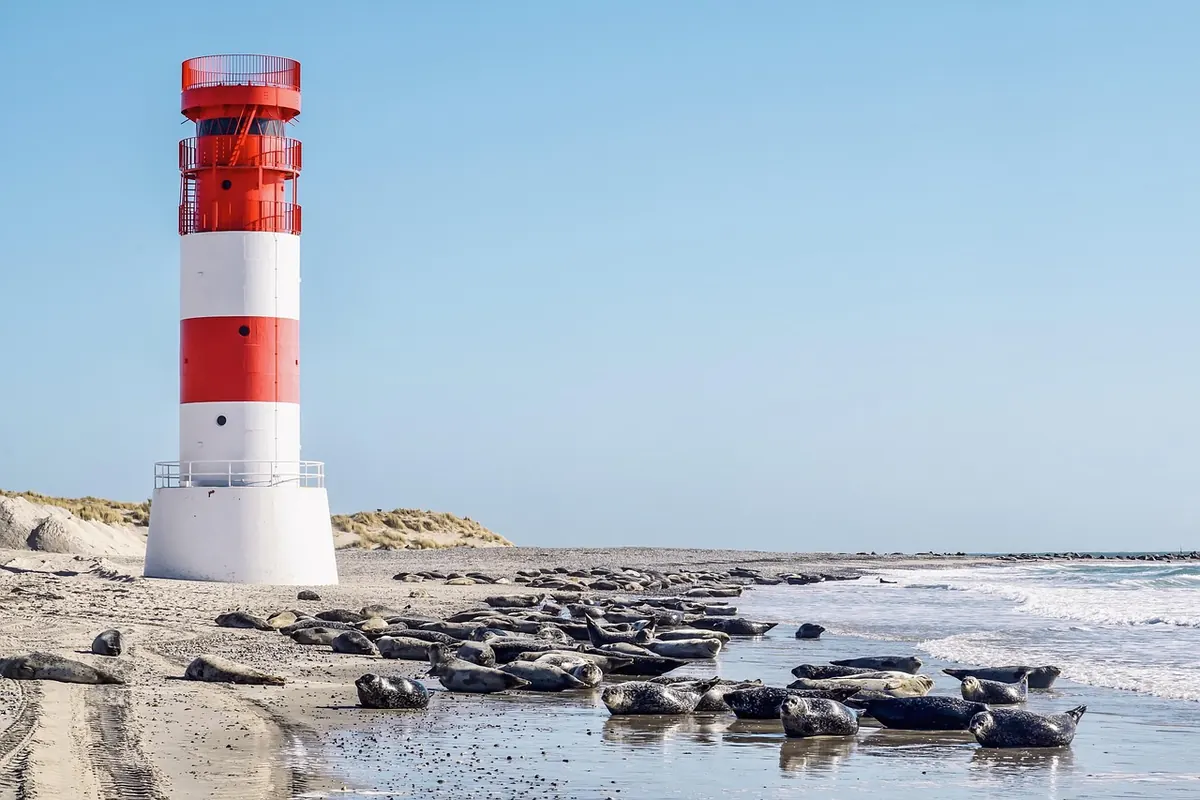
Look for them on offshore skerries at low tide, estuary sandbanks, and rocks below cliff paths. Cornwall, the Wash, the Farne Islands, Orkney and Shetland all hold good numbers. From a respectful distance you can often count dozens without a single animal moving.
Grey seals are the ones most often seen from cliff paths in the south and west, especially in autumn and winter when pupping season begins. Common seals tend to prefer sheltered estuaries and sandbanks, and they pup in summer. If you find a white-coated seal pup alone on a beach, do not approach it. The mother is usually nearby, waiting for you to leave. Use binoculars, keep your distance, and let the pup rest.
Most people see a fin and say dolphin. In UK waters the odds usually point elsewhere.
Harbour porpoise are small — roughly the length of a large dog — and dark, with a low triangular fin. They surface with a rolling motion, showing a fin and a sliver of back, then vanish. No leaps, no bow-riding, usually alone or in twos and threes near tide races and channels. In calm weather you can sometimes hear the puff of their exhalation from a cliff.
Bottlenose dolphins are what people picture: two to four metres long, a curved fin, a thick body, often in pods, and happy to breach and bow-ride. Cardigan Bay, the Moray Firth, Cornwall and the southwest are the classic places to try.
Common dolphins are smaller, with a cream and yellow hourglass pattern along the flank, and often travel offshore in fast, large groups. Risso's dolphins are pale grey, heavily scarred, and carry a tall fin; they tend to move in slow, steady groups and often show only their blunt heads and tall dorsal fins, with no beak visible.
There are other possibilities, too. White-beaked dolphins are stocky, fast and sometimes seen in the North Sea. Atlantic white-sided dolphins appear in the north and west, often in energetic pods. And if you see a tall, straight black fin with a white eye patch, you are not looking at a dolphin at all — you are looking at a killer whale. Orcas are rare from shore, but they turn up around Shetland, Orkney and the Hebrides, and they are unforgettable.
Whales are harder from shore, but they are not impossible. Minke whales are the most regular large cetacean around the UK coast. They are relatively small — up to about ten metres — with a pointed snout and a curved dorsal fin. Their blow is thin and not very tall, so it can be easy to miss against a grey sea.
Humpback whales pass through in spring and autumn, especially off the west coast of Scotland and Cornwall. Their blow is bushy and obvious, and if they fluke — lifting their tail before a deep dive — you have a confirmed humpback. Sperm whales are seen far offshore, usually over deep water beyond the continental shelf, and their blow angles forward from the left side of the head. Pilot whales are actually large dolphins, often in tight, slow-moving pods, and they can look like a row of dark fins moving together.
The trick with whales is to look for the blow first: a puff of mist that appears and disappears in a second. Then watch for a long back and a fin. If the animal lifts its tail, note the shape and timing. That is the moment to raise your binoculars.
You can watch at any time, but conditions change everything. The best days are calm, with a light onshore breeze and no glare. Early morning often gives the flattest sea and the best light. A rising tide can bring fish and cetaceans close to headlands, while tide races and narrow channels concentrate porpoises. After a storm, nutrients mix and feeding activity increases, so the next calm day can be excellent. Spring tides can also be good.
Avoid heat haze, which makes fins disappear into the shimmer. Polarised sunglasses cut glare and help you see below the surface. And always watch the birds. Flocks of gannets, terns or auks diving into the sea often mean fish pushed to the surface — and dolphins or whales are rarely far behind.
You do not need much. A pair of 7x42 or 8x42 binoculars is ideal for shore watching: wide enough to find a moving animal, bright enough for grey days. A spotting scope helps for distant seals and slow-moving whales, but it is not essential. Bring a camera if you like, but do not spend the whole time behind it. A notebook and pencil, a flask, and layers of warm, windproof clothing will keep you out longer.
Scan slowly. Divide the sea into sectors and work through them left to right, near to far. Use landmarks — a headland, a buoy, a gap in the cliffs — to remember where you saw something. Try the twenty-minute rule: pick a spot and watch for twenty minutes before moving on. Many sightings happen just as you are about to leave.
If you see a fin, note the time, direction of travel and number of animals. That information is as valuable as the sighting itself.
All UK marine mammals are protected by law. It is an offence to disturb them, and that includes getting too close, chasing, herding or cornering them. Keep well back: at least 100 metres from seals and 400 metres from large cetaceans, and never position yourself between an animal and the open sea. If an animal changes its behaviour because of you — diving suddenly, swimming away, or staring in your direction — you are too close.
Keep dogs on a lead near seal haul-outs. Never touch a seal pup, even if it looks abandoned. And remember that cliff-top watching is often better than beach-level watching: you see more, and you disturb less.
Your notes can help conservation. Record the date, time, location, species, number of animals, behaviour and sea state. Report your sightings to organisations such as the Sea Watch Foundation, ORCA or your local wildlife trust. Many run shoreline surveys and welcome beginners. Even a single porpoise counts. The more records we have, the better we understand how UK marine mammals are doing.
So pack binoculars, pick a headland, and give it an hour. The sea is not a zoo, but it rewards patience. The first blow or fin you identify yourself will stay with you long after you leave the coast.
Photo: suju-foto / Pixabay