Trending

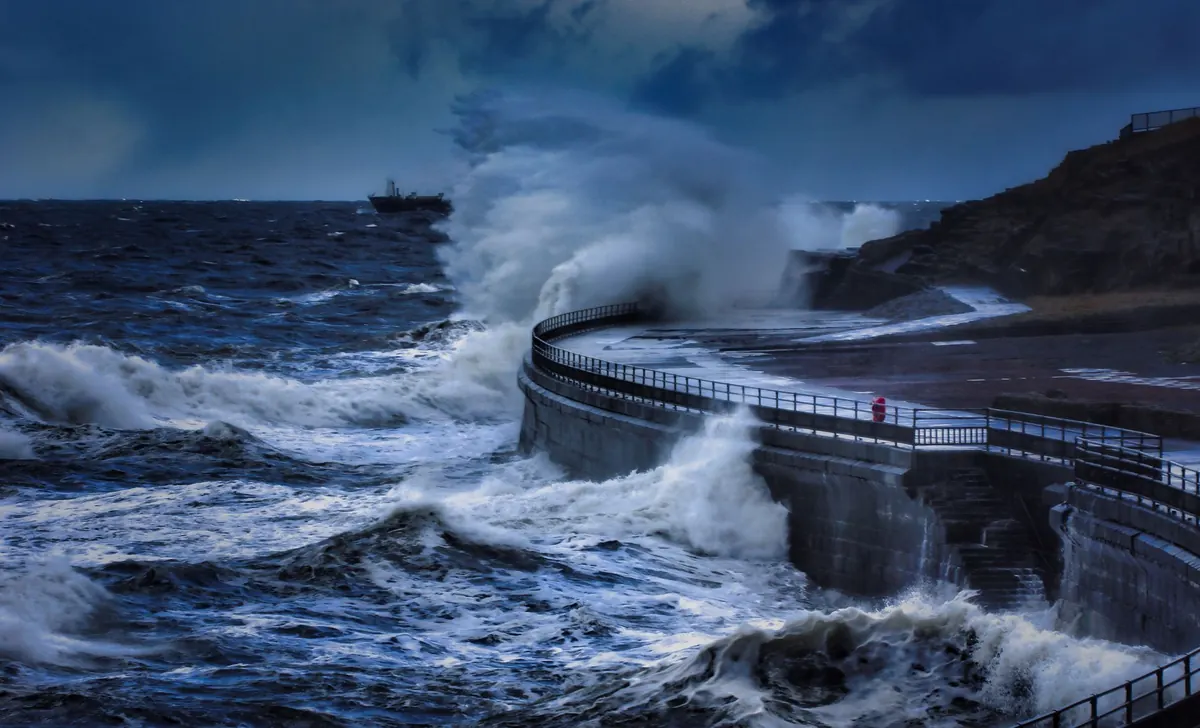
King tides are the ones that make the local news: the harbour wall under a foot of water, the causeway gone, the sea running up the slipway while a small crowd films from the pub steps. You won't find the phrase in a UK tide table — it's borrowed from Australia and New Zealand — but it's handy shorthand for the biggest high waters of the year, and knowing when they land makes them far easier to enjoy.
A king tide on its own is predictable, and often beautiful. Add a deep low-pressure system and a gale from the wrong direction and the same tide becomes something else entirely. Telling the two apart is most of the battle.
The good news is that the astronomical part — the bit driven by the moon and sun — is forecast years in advance. The weather part is not. So the trick is to know when the big tides are due, then watch the forecast like a hawk in the days before.
Strictly, it's a very high spring tide, and usually a perigean spring tide at that. Spring tides come twice a month, at new and full moon, when sun and moon pull in line. When that alignment coincides with the moon near perigee — its closest point to Earth — the high water runs higher than usual and the low water drops lower.
Two things follow. First, a king tide is a double event: the same force that floods the harbour wall drains the estuary, exposing channels, mud and rocks you have never seen. Second, height is intensely local. The Severn Estuary and Bristol Channel have some of the largest tidal ranges anywhere in the world, while stretches of the east coast and the Irish Sea see far more modest differences. A king tide in one port is an ordinary Tuesday in another.
The highest tide of the year at your nearest port is not automatically the highest at the next one along, either. Coastline shape, estuary width and the way water sloshes back and forth shift the peaks by days.
The moon's orbit is not a perfect circle. At perigee it is roughly 356,500 km away; at apogee, about 406,700 km. That difference of around 50,000 km may not sound much in astronomical terms, but it is enough to amplify the tidal bulge by around 5–10 per cent. When perigee falls within a day or two of a new or full moon, you get a perigean spring tide — the classic king tide. The effect is greatest when the moon is also near the equator, which happens around the equinoxes.
A king tide is not a freak event. It is a predictable alignment of sun, moon and Earth — which is exactly why it can be forecast, and why you can plan to watch it safely.
Spring tides run on a fortnightly cycle, so every month has two decent sets. The standout tides of the UK year cluster around a few windows:
There is a longer rhythm, too. The moon's perigee advances by about 8 hours each orbit, and the spring-neap cycle is 14.8 days. The two get back into step roughly every 206 days, about seven months. That is why the very biggest perigean spring tides tend to arrive in clusters — for example, in a given year you might see them in March and September, then again the following April and October.
The UK's tidal range is a lottery of geography. The further you are from an amphidromic point — a spot in the sea where tidal range is zero — and the more a coastline funnels the incoming water, the bigger the range. The Severn Estuary and Bristol Channel can see a range of over 14 metres on a big spring tide, second only to the Bay of Fundy in Canada. Morecambe Bay, the Solway Firth, the Humber Estuary and the Thames Estuary also punch above their weight.
If you want to see a king tide in full flow, these are the places that reliably deliver. But they are also the places where the water moves fastest and the hazards are greatest. A falling tide in Morecambe Bay can expose miles of sand, but the incoming tide can outrun a walking pace. Never venture onto tidal flats without a local guide.
Start with the official tide tables. The UK Hydrographic Office publishes annual tide tables for standard ports, and the data is available through apps and websites like the National Tidal and Sea Level Facility. Look for the predicted high water times and heights. A king tide is simply a high water that is significantly above the average spring tide — often close to or above the Highest Astronomical Tide (HAT).
Next, check the weather. The Environment Agency issues flood warnings for coastal areas, and the Met Office provides sea state and storm surge forecasts. A deep low-pressure system can raise sea level by half a metre or more, and a strong onshore wind can add another metre. When an astronomical king tide coincides with a storm surge, you get the kind of coastal flooding that makes the national news.
Finally, compare the predicted tide to local landmarks. Many harbours have a tide gauge or a marked scale. If the forecast high water is above the top mark, you know it's going to be a big one. But remember: the actual water level can exceed the predicted level by a significant margin if the weather turns.
King tides are spectacular, but they are not a spectator sport for the unprepared. The water is powerful, cold and unpredictable, and the biggest tides often coincide with the worst weather. Use this checklist to stay safe:
King tides are one of the great free shows of the British coast. They remind us that the sea is not a static backdrop but a force that shapes our shores, our harbours and our calendars. Watch them with respect, check the tables, keep an eye on the weather, and you'll see the coast at its most dramatic — and live to tell the tale.
Photo: Ray Bilcliff / Pexels